We’ve been told about time, history, and the way human beings have tried to make sense of the past. We speak about history as though it were a perfectly preserved record. We place events neatly along a timeline. We give centuries names. We assign dates to wars, births, discoveries, civilizations and collapses.
It feels permanent when we look at it on a page. I realize now how much of our understanding of the past depends upon what survived.
What was written down.
What was preserved.
What was copied.
What was lost.
What was translated.
What later generations were able to find and understand.
One part of history that fascinates me is the Dark Ages. The medieval period was not simply a time of ignorance or cultural emptiness. There is one theory I read before that one reason parts of the early medieval period were later perceived as “dark” was because there was less surviving written material in some regions compared with the enormous documentary record left behind by the Roman world.
There were fewer pieces of the puzzle. Looking backward through the centuries, historians could see that something had happened, but there were stretches where the surviving record became much quieter.
Sometimes I find myself wondering what that might look like in our own civilization. Because we are living through an extraordinary moment in human history.
We have documented almost everything.
We photograph our lives.
We record our conversations.
We save our memories.
We write books digitally.
We store our businesses online.
We keep our photographs and videos in the cloud.
We communicate through platforms that exist somewhere inside enormous networks of computers and servers. And our collective memory has become unimaginably large.
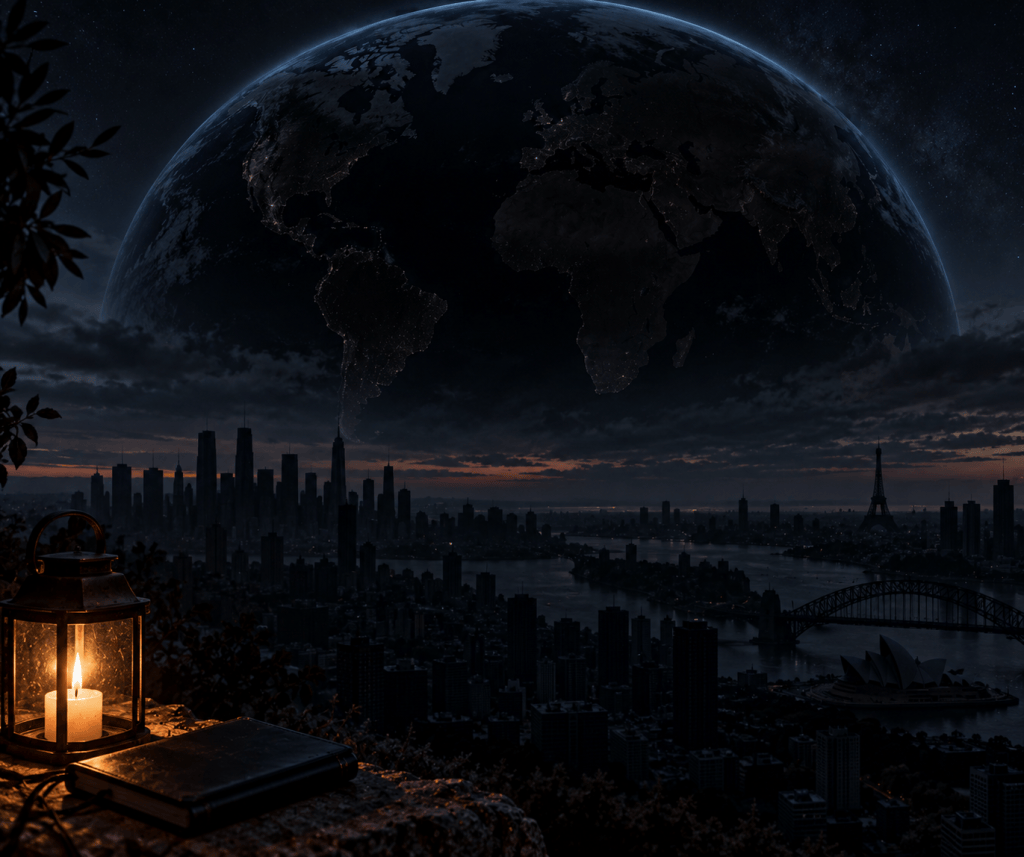
There have been conversations in the US about a possible future “blackout,” a period in which the internet or other digital infrastructure could become unavailable. There are many different claims about what could cause such an event, from solar activity to cyberattacks to large-scale infrastructure failures.
There is no established evidence that a civilization-wide internet blackout is scheduled to happen. So I am not writing this as a prediction.
I am asking a question. A what-if question.
What if, one day, we simply could not access the digital world we have built?
Imagine waking up and reaching for your phone. The screen is there. The device is there. But the world you normally reach through it is gone. You cannot access your email, social media, and all the stuff you stored online are unavailable. You can’t connect to your banking app. All business systems are offline. Waze won’t load.
At first, perhaps we would assume it was temporary. Then imagine that the hours became days. And days became weeks. And eventually, we had to accept that some things might not be coming back.
That is when I think about the Dark Ages differently. Not as a time when humanity suddenly became less intelligent. Not as a period when civilization simply vanished. But as a reminder of what happens when the connection between people and their records becomes broken.
Imagine someone living five hundred years from now trying to understand us. They know we existed. They find fragments of our civilization – books, buildings, printed photos, coins, documents, old devices. They know we are technologically advanced. They know we communicated across the planet almost instantaneously. They know we created extraordinary systems of knowledge.
But what happens when so much of that knowledge is trapped inside systems that can no longer be accessed?
What happens to the photographs that existed only in the cloud?
What happens to the conversations that were never printed?
What happens to the videos that were stored on platforms that no longer exist?
What happens to the businesses whose records lived entirely inside digital systems?
What happens to the knowledge that existed only behind passwords, servers and networks?
Perhaps future historians would know that our civilization was here. But large pieces of our story might simply be missing. And maybe that is what makes this thought so uncomfortable.
We often assume that because we are recording more than any civilization before us, our history will be better preserved. Perhaps it will.
But perhaps abundance creates its own kind of vulnerability. A handwritten journal can sit quietly in a wooden box for a hundred years. A book can be placed on a shelf and read by someone who has never met its author. A photograph can survive in an envelope. A story can be carried from grandmother to granddaughter. None of these things require a server or password. None require a functioning internet connection.
And there is something beautifully human about that. Because long before we had databases, we had memory.
Perhaps the greatest risk isn’t necessarily that technology disappears. Perhaps it is that we have forgotten how much of ourselves we have entrusted to it. So much of our modern lives exists somewhere outside of us.
And perhaps this post is an invitation to bring some of it home.
Print the photograph that means something to you.
Write down your family’s stories.
Keep physical copies of the information that matters.
So keep your books, your journals. Start teaching, sharing, and remember.
Technology doesn’t have to replace human memory. It can support it. AI doesn’t have to become the keeper of everything we know. It can help us organize, teach, translate, preserve and pass knowledge forward.
But WE still matter.
I think the real lesson hidden inside the idea of the Dark Ages is that we remember who we are, our past because someone told the story. Someone cared enough to pass it forward.
We are living in an age where humanity can preserve more information than ever before. At the same time, we are becoming increasingly dependent upon systems that allow us to access that information.
I wonder what our descendants will think of us. What will they remember? What will they find? What will have survived? What will have disappeared?
Perhaps they will look back at our time and marvel at how much we knew and what we created.
I don’t know if a great blackout will ever happen. I don’t know what the next hundred years will bring.
But history has taught us that civilizations change. Systems change. Calendars change. Languages change.
Records disappear but we always continue to find ways to carry the light forward.





Leave a comment